
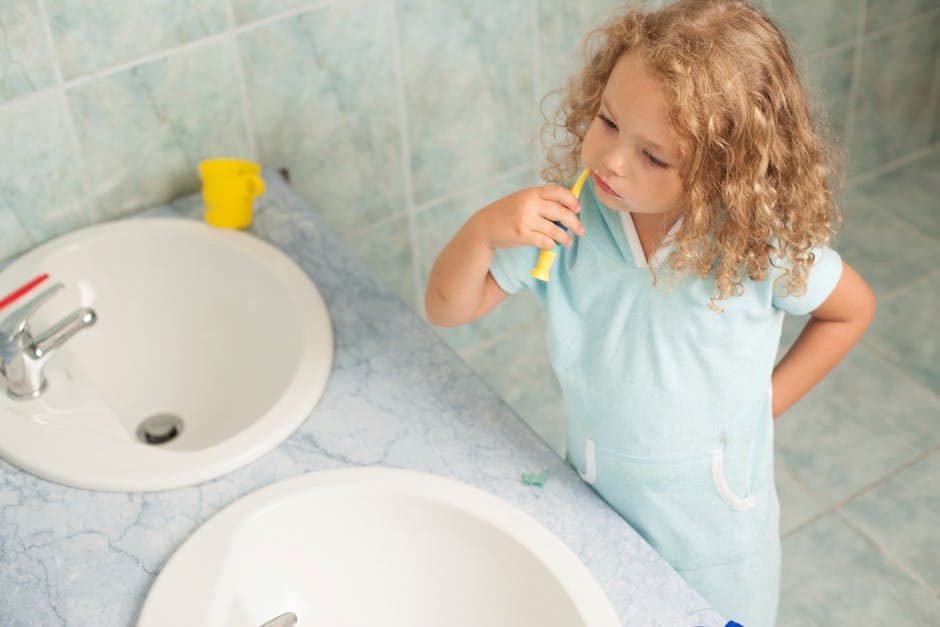
Your child's dental habits right now shape their oral health for decades to come. The good news is that keeping your child's smile healthy comes down to a handful of consistent, practical habits, nothing complicated, nothing stressful.
As a parent, you want the best for your children, and that includes teeth and gums that will serve them well throughout their lives. Here are five straightforward tips from Dr. Deepak Maharaj and the team at Bedford Family Dentistry, real-world advice for Bedford families who want to give their kids a strong start.
How Early Should Your Child See the Dentist?
The American Academy of Pediatric Dentistry (AAPD) recommends that every child have their first dental visit by age 1, or within six months of their first tooth coming in, whichever comes first. That surprises a lot of parents. Many families assume a child does not need to see a dentist until they have a full set of baby teeth or until they start school, but those early visits are valuable for several reasons.
First, they allow Dr. Maharaj to check that your child's teeth and jaw are developing as expected. Some concerns, like the way the upper and lower teeth fit together, or whether the tongue or lip is tethered in a way that could affect feeding or speech, are simplest to address when identified early.
Second, early visits help your child become comfortable with the dental office before any treatment is ever needed. A first visit at age 1 is short and gentle. We count teeth, take a quick look at the gums, and let your child explore the chair and the room at their own pace. There is no drilling and no stress. By the time they are old enough for a cleaning or a filling, our office already feels familiar rather than unfamiliar.
Third, these visits give us a chance to talk with you about your child's specific situation, their diet, their fluoride exposure, how to clean those first few teeth, and when to expect the next ones. Every child is different, and we would rather give you personalized guidance than have you guessing from something you found online.
The ADA supports this timeline as well, emphasizing that early dental visits can help you get ahead of problems before they start, which is always easier and less involved than treating issues after they have developed.
How Can You Make Brushing Easier for Everyone?
Getting a toddler or young child to brush their teeth can feel like a negotiation every single night. We hear this from parents in Bedford all the time, and our advice is simple: make it a routine, keep it positive, and let go of perfection.
Start cleaning your baby's gums with a soft, damp cloth even before the first tooth appears. Once teeth come in, switch to a small, soft-bristled toothbrush. For children under 3, the AAPD recommends a rice-grain-sized smear of fluoride toothpaste. For children ages 3 to 6, a pea-sized amount. Fluoride toothpaste matters because fluoride strengthens enamel and helps prevent cavities, the AAPD recommends it from the very first tooth.
Let your child pick out their own toothbrush. A fun color, a favorite character, it does not matter which one, as long as it makes them want to use it. A timer or a two-minute song helps them know how long to brush. There are phone apps with animations and rewards that keep younger kids engaged, too. The goal is two minutes of brushing, twice a day, morning and night.
For children under about age 7 or 8, you should be doing the actual brushing, or at least finishing up after they have had their turn. Young children simply do not have the fine motor coordination to brush effectively on their own yet. Think of it like tying shoes, they can learn the motions, but they need your help getting it right for a while.
And something that matters just as much as brushing: flossing. Once your child has two teeth that touch, it is time to start flossing between them. Kid-friendly floss picks make this much easier than trying to wrap regular floss around small fingers. Food and plaque get trapped between teeth, and brushing alone cannot reach those spaces.
How Does Sugar Affect Your Child's Teeth?
Cavities form when bacteria in the mouth feed on sugar and produce acid. That acid is what wears away tooth enamel. So it is not just how much sugar your child eats, it is how often their teeth are exposed to it throughout the day.
A treat after dinner is far less of a concern than sipping on juice or nibbling on crackers all afternoon. Every time sugar enters your child's mouth, bacteria produce acid for about 20 to 30 minutes. If your child is snacking on something sweet every hour, their teeth are under acid exposure almost continuously.
A few specific things to be aware of: juice boxes and pouches are a common one. Many parents think juice is a healthy choice, and in small amounts it can be part of a balanced diet, but juice contains natural sugars that affect teeth the same way soda does. The AAPD recommends no more than 4 ounces of juice per day for children ages 1 to 3, and no more than 6 ounces for ages 4 to 6. Water and milk are much better choices between meals.
Sticky snacks, gummy fruit snacks, dried fruit, caramel, taffy, are especially tricky because they cling to the grooves and surfaces of teeth and stay there for hours. Even foods that do not seem sugary, like goldfish crackers or pretzels, break down into simple sugars in the mouth and feed the same cavity-causing bacteria.
We are not saying your child can never have a treat. A scoop of ice cream on a summer evening in Bedford is one of the good things in life. The key is to keep sugary foods and drinks close to mealtimes, offer water to rinse the mouth afterward, and brush before bed. Those simple habits make a real difference.
Does Your Child Need a Mouthguard for Sports?
Bedford is an active community. Kids here play soccer, basketball, football, baseball, and softball. They ride bikes on the trails, skateboard around town, and roughhouse with siblings in the backyard. Any activity with a risk of contact, falls, or something coming at the face is an activity where a mouthguard is worth having.
The ADA estimates that mouthguards prevent roughly 200,000 oral injuries each year in the United States. A mouthguard protects your child's teeth, lips, tongue, cheeks, and jaw from impact. Without one, a single hit during a game can knock out a tooth, fracture a jaw, or cause a deep cut to the lip or tongue.
There are three basic types. Stock mouthguards are the least expensive, you buy them pre-formed at a sporting goods store. They tend to be bulky, often fit loosely, and can make it hard to breathe and talk. Boil-and-bite mouthguards are a step up. You soften them in hot water and bite down to shape a rough custom fit. They are better than stock guards but still not ideal.
Custom mouthguards from our office are the most comfortable and effective option. Dr. Maharaj takes an impression of your child's teeth, and the mouthguard is made to fit their mouth precisely. It is thinner, stays in place, and provides significantly better protection than anything you can buy off the shelf. For children in braces, a custom mouthguard is especially important because an impact can turn brackets and wires into a source of injury to the soft tissues inside the mouth.
If your child plays any contact sport or high-activity sport, a mouthguard is one of the simplest and most effective pieces of protective equipment they can have.
How Does Your Own Attitude Shape Your Child's Dental Health?
This last tip might be the most powerful one, and it does not cost a thing. Your children learn by watching you. If your child sees you brushing and flossing every day, they understand that oral health is a normal, important part of life, not something unusual or unpleasant. If they see you heading to the dentist for regular checkups without anxiety or complaint, they will be far less likely to develop dental fear.
Talk positively about the dentist. Try to avoid words like "hurt," "shot," "needle," or "drill" when discussing dental visits, even casually with other adults when your child is nearby. Children pick up on language and tone, and a single offhand comment about a tough dental experience can create anxiety that stays with them for years.
If your child asks what happens at the dentist, keep it simple and warm. "The dentist counts your teeth and makes sure they are healthy." "They clean your teeth so they stay strong." That is all a young child needs to hear. Let our team handle the specifics when you are in the office, we are experienced at introducing everything in a way that is age-appropriate and reassuring.
Some parents in Bedford share with us that they have their own dental anxiety, and they worry about passing it along to their kids. If that sounds like you, please talk to us about it. We can help you work through your own concerns, and in doing so, you will be giving your child a genuine gift, the ability to approach dental care feeling at ease.
How Do These Habits Pay Off Over Time?
The effort you put into your child's dental health now pays off for decades. Children who develop good brushing and flossing habits, eat a balanced diet, wear a mouthguard during sports, and visit the dentist regularly are far less likely to face serious dental problems as adults. They are less likely to need crowns, root canals, extractions, and the involved treatments that can follow years without consistent care.
At Bedford Family Dentistry, we love treating families. Some of our favorite moments come from watching a nervous three-year-old grow into a confident ten-year-old who hops into the chair and opens wide without a second thought. That kind of comfort comes from consistency, gentleness, and building trust over time.
If you have questions about your child's dental health, or if it is time for their next visit, give us a call at 540-227-7862. Dr. Maharaj and our team are always happy to help Bedford families raise healthy, confident kids.